Back to News
Want the short answer? Choosing the right roof pipe flashing for metal and tiled roofs comes down to three things: matching the flashing material to your roof type, getting a snug fit around the pipe, and picking something tough enough for Melbourne weather. That’s the whole game. But get any one of those three wrong, and you’ll be calling a roofer within a year. Metal roofs now sit on roughly three out of four new Australian homes, so getting this right matters more than most people think. Let’s make sure it’s not your roof with the problem.
What Roof Pipe Flashing Is and Why the Wrong Choice Leads to Leaks
A roof pipe flashing is the piece that wraps around any pipe, vent, or flue where it pokes through your roof. Every roof has a few of these spots. Hot water vents, plumbing stacks, and bathroom exhausts all need a pipe penetration sealed up tight. Without good flashing, rain finds its way in through that gap around the pipe. It doesn’t take much. Just one small crack lets water ingress happen, drop by drop, until your ceiling shows a brown stain. By then the damage is done. That’s why understanding roof flashing basics matters before you buy anything off the shelf.
Types of Roof Flashing Materials and Where Each One Works Best
Not all flashing is equal. The material you pick changes how well it bends, seals, and lasts. Here are the main flashing types you’ll come across:
- Aluminium flashing: light, cheap, and easy to shape, but it can react badly with certain metal roof panels.
- Lead flashing: bends around odd shapes with ease and lasts decades, though it costs more.
- EPDM rubber boots: a flexible pipe collar that stretches over the pipe size and grips tight. Great for round penetrations.
- Silicone flashing: handles extreme heat and UV better than rubber, so it holds up under a hot tin roof.
- Copper flashing: pricey, but it won’t corrode near coastal areas.
Each flashing product suits a different roof profile. A flat tile needs something different than a corrugated sheet. That’s the part people skip, and it’s the part that actually matters.
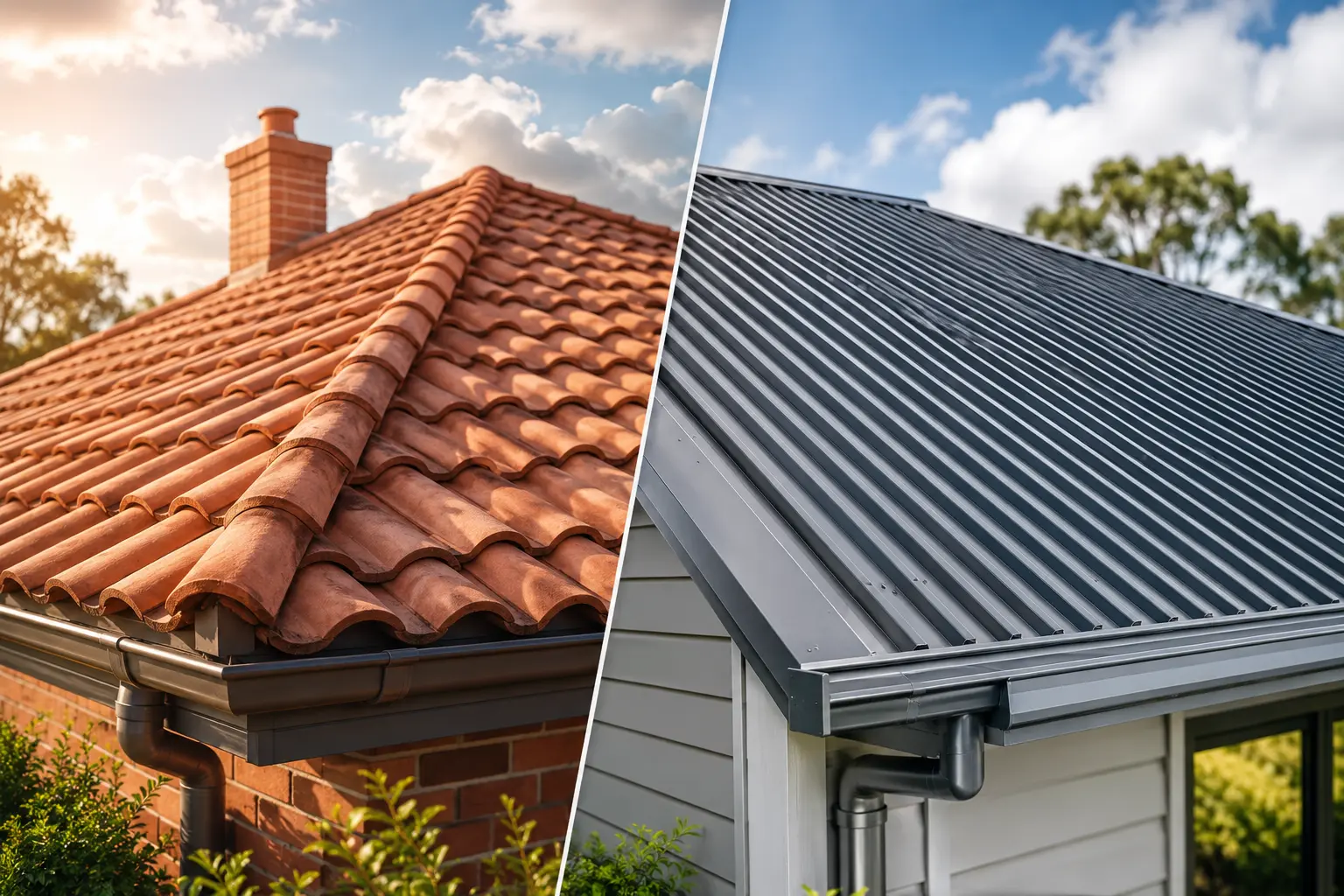
Choosing Pipe Flashing for Metal Roofs (Colorbond and Corrugated Iron)
Metal roofing systems move. They expand in the sun and shrink at night. Your flashing has to move with it, or you’ll get gaps. For Colorbond roofs, a flexible rubber or silicone boot works best. It hugs the pipe and flexes with the corrugated pattern underneath. Skip anything too rigid. A stiff metal flashing on a corrugated iron roof often sits proud of the ridges, leaving small tunnels for water to sneak through. Always match the flashing’s base shape to your roof’s exact wave pattern. A generic flat base on a corrugated roof profile is asking for trouble later.
One more thing. Never mix metals carelessly. Aluminium touching untreated steel can corrode fast in the wet. Pick a flashing material rated for your specific roof metal, and you’ll avoid a repeat job in two years.
Choosing Pipe Flashing for Tiled Roofs (Terracotta and Concrete Tiles)
Tiled roofs play by different rules. The pipe sits lower than the tile surface, so flashing needs to tuck under the tile above and sit over the tile below. Here’s a simple way to think through it:
- Measure the pipe size and the gap between tiles before buying anything.
- Choose a lead or aluminium base that can be dressed and shaped by hand around the tile contour.
- Slide the upper edge under the tile above so water runs over the top, never behind it.
- Seal the lower edge with a compatible sealant, not just pressure alone.
- Check the seal around the pipe again after the first heavy rain.
Concrete tiles are heavier and sit flatter than terracotta, so counter flashing helps lock things down where two roof planes meet. Terracotta’s curved profile needs a flashing that can be moulded, which is why lead stays popular even on tile roofs today.
Melbourne Weather Considerations When Selecting Roof Flashing
Melbourne throws everything at a roof. Baking sun one day, sideways rain the next, and a cold snap right after. This kind of harsh weather is tough on cheap flashing. UV rays crack rubber over time, so a lower-grade boot might only last five years here instead of fifteen. Go for flashing with real weather resistance and UV stabilisers built in, especially on north-facing roof surfaces that cop the most sun. Wind-driven rain also tests roof edges and any spot where a roof meets a vertical wall or chimney, so don’t skimp on sealant there either. A roofing project built for Sydney’s climate won’t always suit Melbourne, so buy local advice, not just a local price.
If you want a deeper look at material choices across different roof profiles, this flashing guide breaks down more of the options available across Australia.
Conclusion
Water always finds the weak spot. A cheap or wrong flashing choice guarantees it finds yours. Match the flashing material to your roof, whether that’s Colorbond, corrugated iron, terracotta, or concrete tile. Get the pipe size and roof pitch right. Choose products built for Melbourne’s swings between heat and heavy rain. Do that, and you’ll create a secure seal that keeps your home dry for years, not months.
FAQs
How do I choose the right flashing for my roof material and pipe penetration?
To choose the right flashing, match flashing options and type of flashing to your roof material and roof penetration; make sure the pipe flashings create a watertight seal that prevents water and avoids costly repairs; consider compatible flashing solutions for various roof types like metal, shingle, or flat roofs.
What flashings provide the best watertight and waterproof protection around vents and pipes?
Lead, EPDM rubber, and flexible silicone flashings and specially designed vent or pipe flashings offer the most reliable watertight and waterproof protection by conforming to the pipe and roof design to prevent water entry and ensure long-term durability.
Can I install roof flashings myself, or should I hire a professional for a watertight seal?
You can install roof flashings yourself, but hiring a professional is recommended to guarantee a watertight seal and proper integration with roof flashings and roof penetration details to avoid leaks and costly repairs.
How do I choose the right roof flashing material for durability across a range of roof types?
Choose flashing materials based on durability and compatibility with your specific roof material—metal and lead are durable for long lifespans, while EPDM and silicone suit a range of roof conditions and reduce long-term maintenance.
What are common flashing problems that lead to leaks, and how can the right flashing prevent water damage?
Common flashing problems that lead to leaks are poorly fitted or incorrect type of flashing, mismatched flashing options, and incompatible roof design. Selecting the right roof flashing and ensuring a watertight seal at every roof penetration prevents water intrusion and costly repairs.